Paradise Now,
Post-scriptum to Philippe Franck (Brussels, February–December 2025)
« We will bomb the reality made for us with all the realities that live within us. »[1]
Werner Moron
I would like to say that this is not a farewell, but a pause in the endless conversation Philippe carried on with the world, with sound itself, with ideas… and, selfishly, with me, day after day, and often even after dark.
So I will try to do as he did—weave some of the voices and thoughts he loved, some resonances, including his own, which he so often entrusted to me over the past 14 years.
For each time—and each time singularly, each time irreplaceably, each time infinitely—death is nothing less than an end of the world. […][2]
Jacques Derrida
I would really like to say that this is not a farewell, that it leaves me a void, certainly, but… above all, he leaves me space. Space to inhabit, to tend, to transform. As Octavio Paz said: “All culture is born of mixture, of encounter, but also of clashes.”[3] And if I say that he was certainly that mixture, that encounter, that permanent creative clash for many, I don’t think I’m lying or even exaggerating. He wasn’t the only one like that, of course. But I speak first for myself.
And I would like to say that this is not a farewell and that this ultimate clash will be creative, and that I’ll keep producing beautiful, slightly saccharine phrases… But that’s not how I feel right now. At all. Right now, it remains a void in which I still see no beauty. Anyway…
“So the survivor remains alone. Beyond the world of the other, he is also beyond or beneath the world itself. In the world outside the world and deprived of the world. He feels at least solely responsible, assigned to carry both the other and his world, the other and the world that have disappeared, responsible without a world, without the ground of any world, now, in a world without a world, as if without land beyond the end of the world.”[4]
Jacques Derrida
I listen again to the piece « Epitaph to Stephan Dunkelman »[5] that the artist Maurice Charles JJ composed upon the death of Philippe’s beloved friend, a singular composer and collaborator with Transcultures. His death four years ago shook us all. I ruminate. Unpleasant thoughts. Perhaps I should stop writing and work in sound rather than words. In “Correspondance dans le labyrinthe des sons” (A. Castant – P. Franck 2024), Alexandre Castant suggested that “sound is permeated by the idea of absence and death. Life is dazzling because it is given through absence; it is through its loss that it sparkles.”[6]. He goes on to say that he has named this phenomenon “necrophony.”.
« On the other hand, what I like my music to do to me is awaken the ghosts inside of me. Not the demons, you understand, but the ghosts. »
David Bowie (reported remarks)[7]
 I take out my guitar, my accordion, an old Roland keyboard, and a few other odds and ends. I find my old amplifier, a small mixing board, cables, a few microphones… I want to take the time to set up my own little studio. I had always said I would do it, and then… At the back of a closet, I find an old issue of the magazine « L’Art Même »[8] in which I had written an article. Leafing through the magazine, I come across a text that reminds me that one of the tasks of art today is to attempt, literally, to “figure the unfigurable”[9], to make certain major problems of our time understandable, or even the impossibility of representing them. “To reinvent everything, we must come back down to earth,”[10], wrote Bruno Latour during lockdown. Not to be more creative, become more digital, or go into space… He calls for the opposite of flight: stop thinking of ourselves as beings “above” the Earth (modern, global, outside the world), and accept that we are first and foremost situated, fragile living beings, embedded in a very concrete zone: the “Critical Zone” (the thin layer where life is possible).
In one of his last editorials, Philippe said that “at the heart of a world in the midst of implosion, culture cannot remain indifferent to the upheavals around it.” He invoked the writer Karl Kraus, who emphasized the danger of a world dominated by the “complete triumph of materialism, mercantilism, productivism, and consumerism” and who already warned that “stupidity is not the absence of intelligence but of imagination.” Philippe wanted to advocate a stance of resistance and poetry, opposing the destructive isolation denounced by Hannah Arendt and Alain Badiou, and defending a transculturality and transalterity based on creation and exchange. It is no coincidence that he anchored this battle from within the sound arts: sound forces us to share space, it travels through walls, it ignores disciplinary boundaries. It brings bodies together, even when they are not looking at each other. An art with no outside images, without heroes to admire, which brings forth landscapes and atmospheres, an « art of drifting » (dear to Guy Debord and Philippe). For him, it was a medium that naturally refused retreat into the self, a field where one could experiment with other ways of being together.
« Acoustic space is where time and space merge as they are articulated by sound […] Deep Listening for me is learning to expand the perception of sounds to include the whole space/time continuum of sound— encountering the vastness and complexities as much as possible. »[11]
Pauline Oliveros
The American sound experimentalist, visual artist, and poet John Cage said in « Silence: Lectures and Writings »: “The world is teeming: anything can happen.”[12] He is also often credited with the phrase: “When the situation is hopeless, anything is possible.”[13] Cage’s way of turning catastrophe into an opening is also reflected in another phrase that Philippe liked to quote: “When a noise bores you, listen to it.”[14] And if there is one thing that can be said about Philippe, it is that he wanted to be that ear. Not just one that merely registers and is easily flattered, but one that listens, curious about vibrations, and above all: always. Philippe sought, in the chaos of the world’s frequencies, the unexpected, the unexpressed. He believed that history was full of noises that no one had yet identified, that no one had yet used. He wanted to make them audible to others. Absolutely.
« I imagined the soundscape as a huge musical concert that is running continuously. […]. Since we are condemned to listen to it, why not try to improve it? »[15]
R. Murray Schafer
I neglected this text again for almost two months. I composed a few broken silences that seemed interesting to me. Nothing to brag about, but it did me good. I had almost forgotten the feeling when words and images—so inexorably important, inescapable day to day—become incidental and everything outside feels superfluous.
Because sound penetrates and fills you. It’s not an “external” space, but the space where I am.
I also exported the 28,076 emails that Philippe and I have exchanged since 2010, created a “To Be Filed” folder for some 200 documents of shared scribbles: unfinished cross-interviews, already well-advanced exchanges to be included in the “Correspondances Confinées”[16] project launched by Philippe in 2020, material for editorials, a whole series of draft ideas and back-and-forth exchanges left fallow… stuff for later, as we used to say.
A kind of Barthesian Neutral that refuses closure, that remains open, available, ready to serve.
Unresolved.
I am the administrator of the evidence of the strength of our bond. I display them as if to say: “Look! Hey! Can you say the same?”
It’s pretty pathetic, but we do what we can. And I have the impression, almost like a taste in my mouth, that I could easily stay here exploring all this material for too long. Stuck. Glued.
I listened on repeat to a playlist I’d put online for his project « Paradise Now », his sonic double[17], son double sonore. I added a few tracks, including his sound adaptation of “Letter to No One”[18], a text by his friend, the American poet Ira Cohen: “about crossing borders, about time and impermanence.”[19]
In recent years, I sorted through all of Philippe’s digital files at least once every six months. When I first met him, he had a wall of CDs, vinyl records, cassettes, books of all sizes, magazines, posters, flyers, brochures, and all sorts of other “stuff”… literally a wall (sometimes a meter high), balanced on either side of a small path that led from his office to his bedroom.
Sometimes we would create little paths in these walls to fetch something from the back. And every time he went out into the great outside, he would bring “things” back to his cave.
So I began organizing his files one last time, a few hours here and there. I knew that Isabelle[20] fwas doing the same thing, with the real things, on her side. We were each organizing our part of Philippe’s life, which we had already been organizing before he left us. And then we would call each other. There wasn’t much to say, but each time it lasted a long time. Philippe existed through accumulation, capture, and redistribution of cultural materials—what artist and remix theorist Eduardo Navas calls “a binder.”[21] In his sound production, sampling, collaborations, and interdisciplinarity were not just compositional techniques or modes of circulation, but a way of being in the world. Creation as a node of flow, not as an origin.
His interest in poetry, and even more so in contemporary and sound poetry, was part of the same gesture. A laboratory of attention and address where materials assemble, voices mingle, and language unravels and recomposes itself. A form of resistance without heroism: holding a listening space against the automatisms of meaning; shifting listening to shift the world. Faced with the acceleration of fragmentation and compartmentalization, it was essential for him to reclaim art as a space for friction and transformation. He wanted Transcultures, through its multidisciplinary approach, to continue inscribing itself in this will to break down barriers, to imagine new forms of artistic hospitality, and to promote the collective reinvention of reality. “As long as imagination persists, as long as creation transcends, there will always be a forest of possibilities to explore”, he wrote to me in the midst of the Covid crisis.
Since Transcultures was founded in 1996, the projects it initiated, the artists it supported, and the bridges it built (between disciplines, people, and “strangers” he loved to bring together) are too many to count. Philippe was a matchmaker, a go-between. He lived creation quite literally as a bond. Not just a work to be exhibited, but a flow, an exchange, a dialogue. Taking up an idea from the philosopher and poet Édouard Glissant: identity is not a root, but a rhizome, a root that reaches toward other roots[22]. And Philippe wanted to be that rhizome, connecting artists, thinkers, dreamers: that daily circulation. This is summed up by sociologist Daniel Vander Gucht[23], when he writes: “The singularity that art stubbornly pursues is nothing other than the multiplicity of our points of encounter with the Other.”[24]
“[Art] is, in a sense, a social bug.”[25]
Marc Veyrat
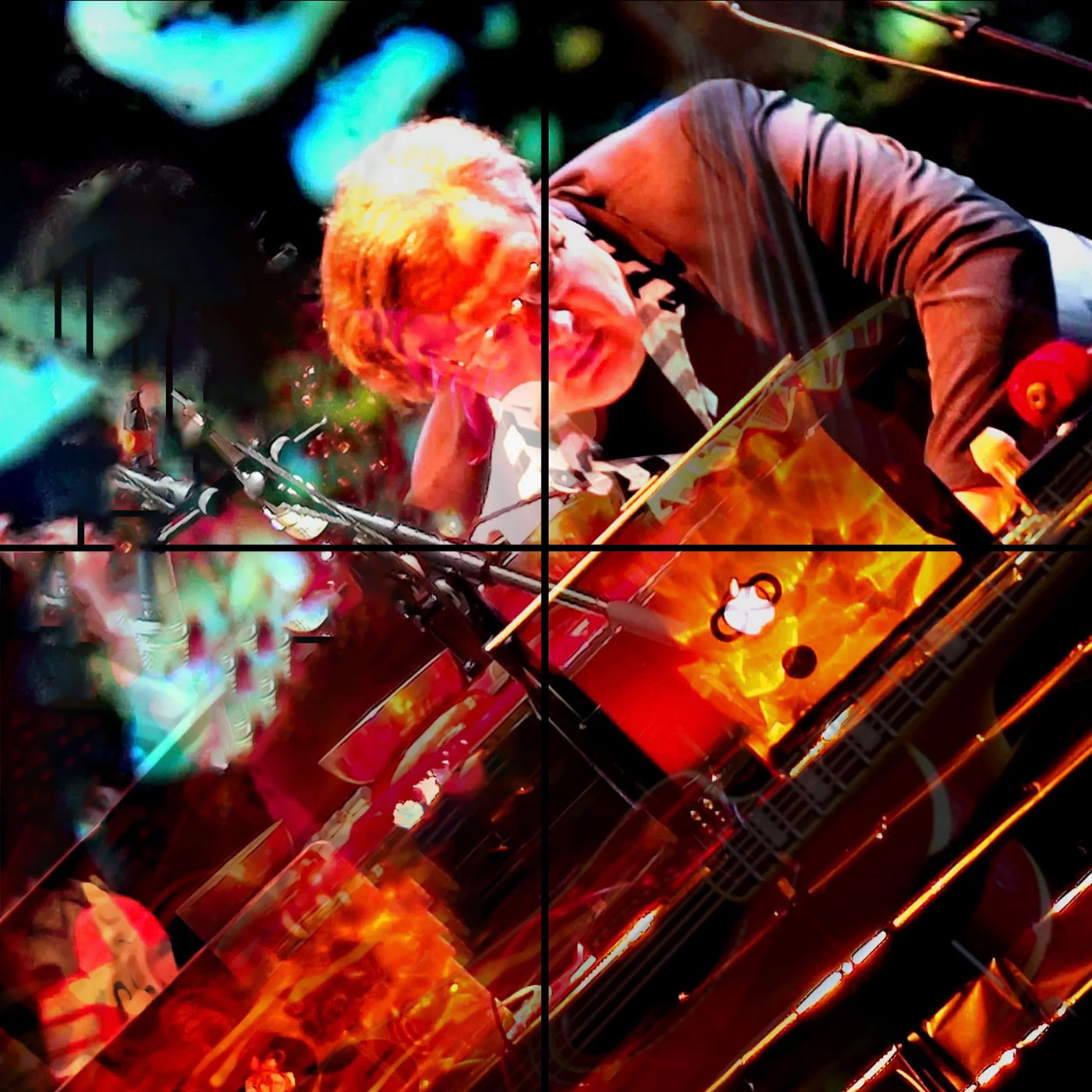
I think that’s why Philippe was always on the move, shifting his imposing frame to go out of his way to meet people, undoubtedly pushing himself to the limit. In the very first text he commissioned from me in 2009, I wrote that he knew “that in order to build solid bridges, it was necessary to go out into the field well in advance to meet people, feel their warmth, and establish direct contact so that the foundations would be solid”, and that he did not hesitate to “pack his bags, even if it meant rarely unpacking them.”[26] He embodied what Gilles Deleuze called a “line of flight”[27], a trajectory that constantly opens up possibilities and potentialities. His nomadic spirit was a necessity, a joyful resistance to overly rigid frameworks, an invitation to rethink, de-simplify, and create in the opening of another way of seeing, hearing, and feeling. “Complex thinking is essential for dealing with the uncertainty and complexity of the contemporary world”, he wrote recently, paraphrasing Edgar Morin, “it rejects crippling simplifications and feeds on doubt, interrogation, and questioning.”[28]
In 2021, in our lockdown correspondence, he noted that “In the rush of our overly hurried lives, we hardly notice that the days are getting shorter and the nights longer…” He saw this as a fatigue of time, an accelerationist logic that has become a cultural reflex, which drains things of meaning and exhausts attention. For him, culture had to remain a place where we slow down enough to hear what is usually lost in the noise. It seems to me that he was not asking art to repair the world (repair it from what, anyway?), but to prevent our absence from it—to believe in the need to remain alert, and to bring style, connection, and risk to it… which is why he so often wrote and repeated, over and over again, the word “resistance” (even if it made some people smile).
“The important thing, it seems to me, is to be able to listen to what does not yet exist, which is, in reality, the only realm of true existence: there is only the future.”[29]
Laurent De Sutter
——————-
Post Scriptum
Brussels, December 7, 2025.
This is not an end.
Jacques Urbanska*
published in the book 24H/24 Paradise – NoCode Editions – Société i Matériel, 2026
[1] Werner Moron, « The Wall Street of Our Desires and Disillusions. Accounting Poetry », cited in Martial Poirson, « Economic f(r)ictions », Hybrid Revue, no. 2, 2015, note 56 – Original French version: « Le Wall Street de nos désirs et de nos désillusions. Une poésie comptable », Multitudes, no. 57, « Art cent valeurs », Autumn 2014, pp. 138–144.
[2] Jacques Derrida, Béliers. The Uninterrupted Dialogue: Between Two Infinities, the Poem, text of a lecture delivered in memory of Hans-Georg Gadamer at the University of Heidelberg (February 5, 2003), Paris, Galilée, coll. « La philosophie en effet », 2003, digital edition, n.p.
[3] Guy Sorman, Les vrais penseurs de notre temps, Paris, Fayard, 1989, interview « Octavio Paz », p. 269 (pagination notably cited by A. Caillé, « La rencontre-choc », Cairn), digital version archive.org
[4] J. Derrida, Béliers, digital edition, n.p.
[5] Listen on soundcloud > soundcloud.com/transonic-be/maurice-charles-jj-epitaph-to-stephan-dunkelman-live-in-braine-lalleud-15-feb2021
[6] Alexandre Castant and Philippe Franck, Correspondances dans le labyrinthe des sons, Brussels, Éditions de La Lettre Volée, coll. « Essais », 2024, p.
[7] David Bowie, remarks cited by Mike McNeilly in the press release « Entertainment Legends David Bowie and Carrie Fisher Memorialized in New Mural Installation », Newswire, Hollywood (CA), January 18, 2017, online – digital edition, n.p.
[8] creationartistique.cfwb.be/arts-visuels/ressources-des-arts-visuels/publications/lart-meme
[9] Jean-Baptiste Carobolante, « Oh les beaux jours! For an Aesthetics of Available Means. 9th Biennale of Louvain-la-Neuve », L’Art même, no. 74, November 2017 – February 2018, pp. 28–29.
[10] Bruno Latour, Où suis-je ? Lessons from Lockdown for Earthbound Beings, Paris, La Découverte, 2021, digital edition, n.p.
[11] Pauline Oliveros, Deep Listening: A Composer’s Sound Practice, Lincoln / Shanghai, iUniverse, 2005, chap. « Acoustic Space » (Introduction), digital edition, n.p. (PDF version available on agosto-foundation.org)
[12] John Cage, Silence. Lectures and Writings, Middletown (Conn.), Wesleyan University Press, 1961, text « 2 Pages, 122 Words on Music and Dance », p. 96. Digital version available on Internet Archive: https://archive.org/details/silencelecturesw1961cage
[13] Formula commonly attributed to John Cage in French, without an identified primary source. More likely a quotation from contemporary folklore.
[14] Only one source attributes this formula in French to Cage, as coming from a text or interview published in Le Monde de l’éducation, July–August 2001 issue. It may also be a paraphrase of an older statement, often presented as a Cage « koan » on boredom: « If something is boring after two minutes, try it for four. If it’s still boring, try it for eight, sixteen, thirty-two, and so on. Eventually one discovers that it’s not boring at all but very interesting. » (John Cage cited by Wes Nisker, « John Cage and the Music of Sound », Inquiring Mind, vol. 3, no. 2, Winter 1986, pp. 4–5, reprinted online, digital edition, n.p.)
[15] R. Murray Schafer, « I Have Never Seen a Sound », Environmental & Architectural Phenomenology (EAP), vol. 17, no. 2, 2006, pp. 10–15. Digital version downloaded via the Studying Sound website (PDF). Text from a keynote lecture delivered at the 12th International Congress on Sound and Vibration (ICSV12), Lisbon, July 2005.
[16] transcultures.be/2020/05/15/correspondances-confinees-commandes-doeuvres-poetiques-nola2020
[17] soundcloud.com/transonic-be/sets/paradisenow
[18] Paradise Now + Ira Cohen, Letter To No One, in City Sonic 2005, CD compilation, Transonic / Transcultures, Mons, 2005.
[19] Ira Cohen – « A Letter To No One ». Brussels: Théâtre Varia, 1996
[20] his partner, with whom he formed the duo Isa*Belle+Paradise Now – transcultures.be/isabelle
[21] Eduardo A. Navas, Remix Theory: The Aesthetics of Sampling, Vienna/New York, Springer, 2012, p. 4.
[22] Édouard Glissant contrasts single root-identity with rhizome-identity, a « multiplied root » that « opens Relation ». See for example: « Poétique de la Relation » (Paris, Gallimard, 1990) and analyses taken up in « La pensée du rhizome chez Édouard Glissant », Madinin’art, 2005.
[23] Also head of the publishing house « La Lettre Volée » > vdg.lettrevolee.com, within which Philippe published several books > lettrevolee.com/spip.php?mot66
[24] Daniel Vander Gucht, L’Expérience politique de l’art. Retour sur la définition de l’art engagé, Brussels, Les Impressions Nouvelles, coll. « Réflexions faites », 2014, p. 90.
[25] Marc Veyrat, « i-REAL: A Journey Through Sensitive Cartographies », interview by Philippe Franck, Turbulences Vidéo, no. 114, Clermont-Ferrand, VIDEOFORMES, January 2022, p. 55.
[26] Jacques Urbanska, « TRANSAT[contamine]: Positive Contamination Syndrome », Revue Turbulences Vidéo, no. 65, Clermont-Ferrand, VIDEOFORMES, 2009, pp. 21–25.
[27] Gilles Deleuze & Félix Guattari, Mille plateaux. Capitalism and Schizophrenia 2, Paris, Éditions de Minuit, coll. « Critique », 1980, chap. « Introduction: Rhizome ».
[28] On complex thought, see in particular: Edgar Morin, Introduction à la pensée complexe, Paris, ESF, coll. « Communication et complexité », 1990 (re-ed. Paris, Seuil, coll. « Points / Essais », 2005).
[29] Laurent de Sutter, Superfaible. Thinking in the 21st Century, Paris, Flammarion, coll. « Climats », 2023
*Text published in the book « 24H/24 Paradise » (Société i-Matériel – January 2026)
*Visual credits: Transcultures, Isa*Belle, Philippe Franck